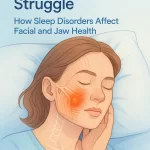
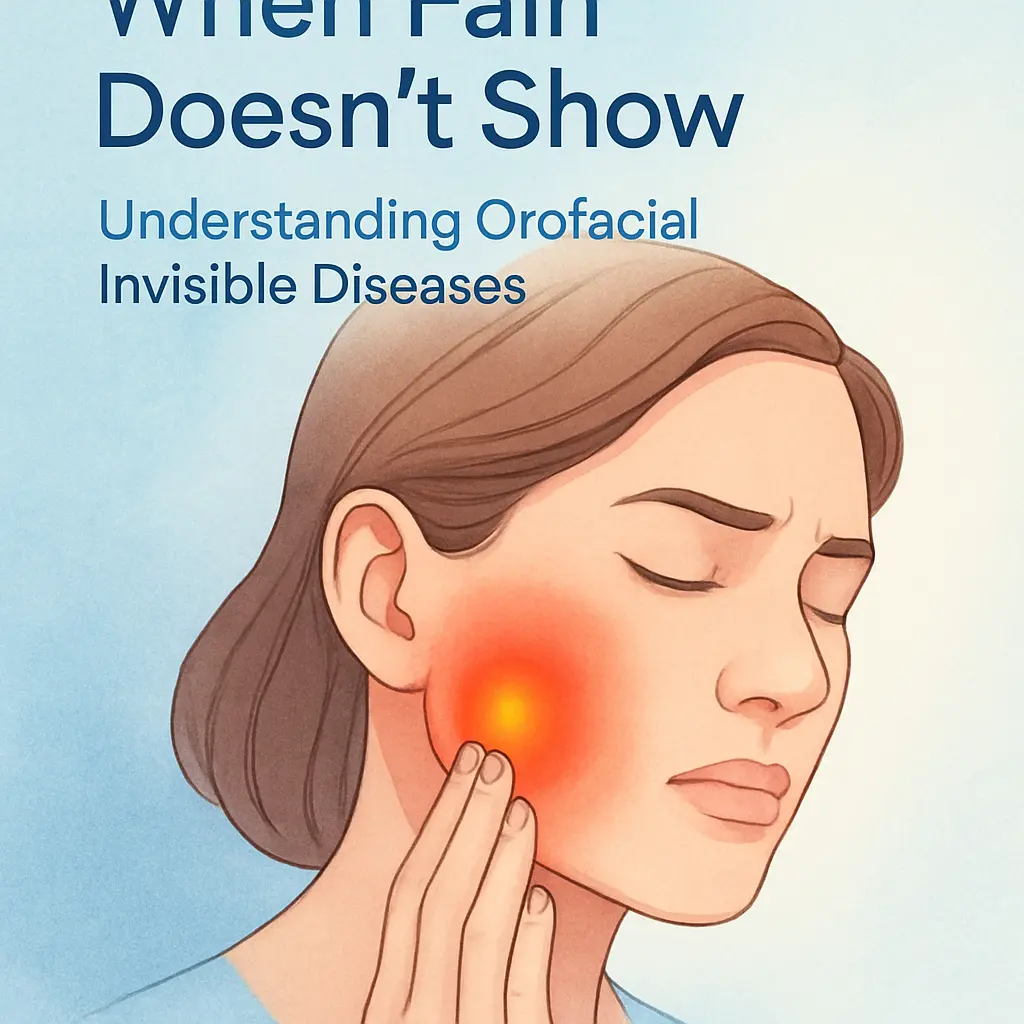
A good night’s sleep is vital for health, but for many, nighttime is when hidden damage occurs. Certain sleep disorders silently harm the jaw, teeth, and surrounding muscles, often without the patient’s awareness. This damage can manifest as chronic orofacial pain — another “invisible” problem that affects daily life.
Sleep and the Jaw Connection
While sleeping, our muscles, joints, and nerves remain active in subtle ways. When sleep disorders interfere, they can create a cascade of problems in the jaw and face.
Common Sleep-Related Orofacial Disorders:
-
Bruxism (Teeth Grinding) — Involuntary grinding or clenching during sleep, wearing down enamel and straining jaw muscles.
-
Sleep Apnea — Interrupted breathing patterns that contribute to muscle tension and jaw misalignment.
-
Sleep-Related TMJ Disorders — Nighttime habits that inflame the temporomandibular joint.
Signs You Might Not Notice
Many patients only discover they have these issues after visiting a dentist or specialist for:
-
Morning headaches
-
Jaw stiffness
-
Tooth sensitivity
-
Clicking or popping sounds in the jaw
Because these symptoms develop slowly, they are often dismissed until significant damage occurs.
How Specialists Can Help
A dental sleep medicine specialist or orofacial pain expert can:
-
Perform overnight sleep studies
-
Recommend custom night guards
-
Coordinate care with sleep physicians
Prevention and Management
-
Maintain good sleep hygiene (consistent bedtime, no screens before bed)
-
Reduce stress through relaxation techniques
-
Seek early screening if you notice jaw discomfort upon waking